Discover the true meaning of “Costa Rica Pura Vida” Go beyond the slogan to understand the lifestyle’s philosophy of optimism, resilience, and community that you can bring home.
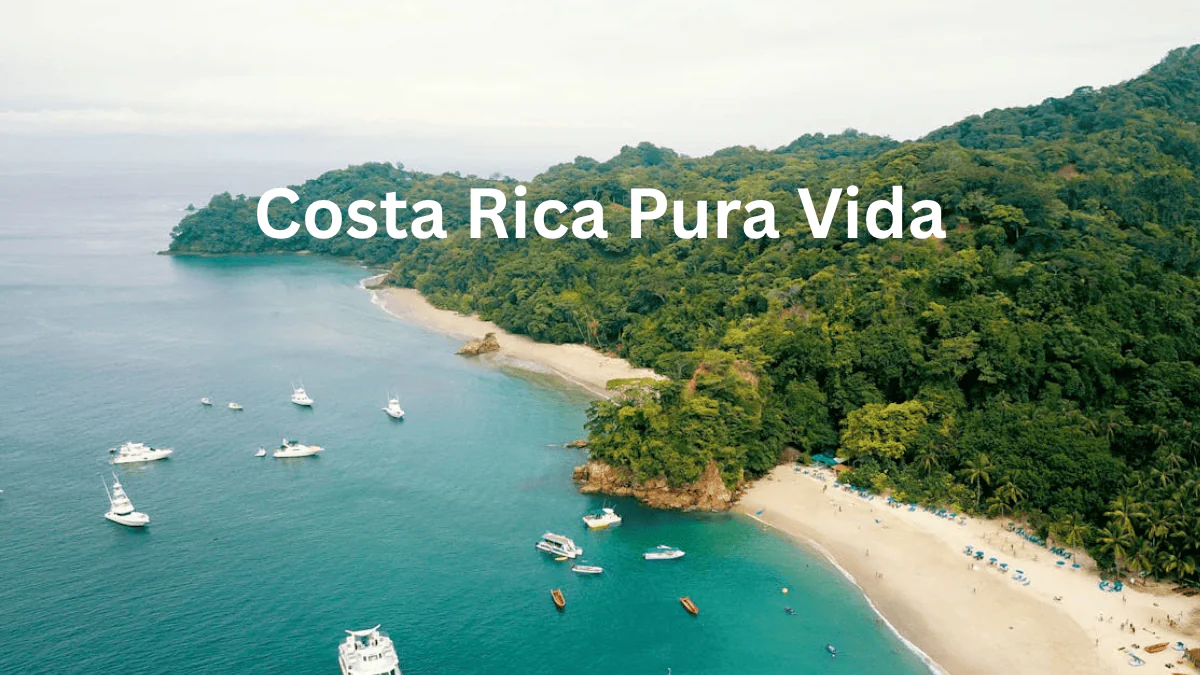
It hits you before you even collect your luggage. A beaming cashier says it as they hand you your colones. Your surf instructor bellows it with a grin after your first decent wave. It’s a quiet offering from a passing hiker on a jungle trail. Pura Vida.
Sure, you’ll see it plastered on bumper stickers and keychains. It’s easy to write it off as just a catchy motto, the Costa Rican “hakuna matata.” But if you stop there, you’re missing the real heartbeat of this place.
You know that look? A friend is just back from Costa Rica, still smelling vaguely of sunscreen and ocean air, and they get this totally bewildered glint in their eye. “Everyone kept saying it,” they tell me, “but what does ‘Pura Vida’ actually mean?”
And right there, in that moment of genuine confusion, you find the whole magic of the thing. It’s the understanding locals have when they share a cup of coffee. It’s the feeling everyone knows instinctively. That’s the Costa Rican spirit. It’s more than a concept; it’s the very essence of a nation’s life and history, all contained in two simple words.
It’s no wonder this little country so often tops the World Happiness Report. They’ve figured something out.
This isn’t just a translation guide. This is a deep dive into the heart of the tico spirit. Let’s unpack what Pura Vida truly means and how you can not just witness it, but live it—both during your visit and long after you return home.
What Does “Pura Vida” Actually Mean? More Than “Pure Life”
Literally translated, “Pura Vida” means “Pure Life.” But that’s like saying a symphony is just “some nice sounds.” The literal meaning barely scratches the surface.
In practice, Pura Vida is a linguistic Swiss Army knife. Its meaning shifts perfectly to fit the context, always radiating a positive core.
- As a Greeting, “¿Cómo estás?” (“How are you?”) is most often answered with a cheerful “Pura Vida!” It means “All is great,” “Life is good,” or “I’m thriving.”
- As a Farewell, instead of “adiós,” you’ll hear “Pura Vida!” It’s a way of saying, “Go in peace,” “Take it easy,” or “Keep living the good life.”
- As a Response to “Thank You”: Here, it replaces “de nada” (you’re welcome) with a warmth that implies, “It was my pure pleasure.”
- As an Expression of Reassurance: If you ask, “Is this road safe?” or “Will we make it on time?” a calm “Pura Vida” means, “Don’t worry, everything will work out. It’s all good.”
When I was in Monteverde, I got a flat tire on a muddy, deserted road, and the only other company I had was some buzzing insects. I started to panic. The fear hit me like a cold wave. I noticed a farmer walking past and heading to his fields. He was kicking up some dust with his boots and said, “Pura Vida” with a silent smile as he was looking over the valley. I could tell that he was doing much more than simply greeting me.
With a steady gaze and the kind of understanding that hung thick in the atmosphere, it appeared as though we had made a silent pledge.. Her steady gaze met mine, and in that charged quiet—like the air before a summer storm—it felt as if we’d made a silent promise. It meant, “I get what’s off,” the way you notice a loose thread catching light on a sleeve.. We’re linked, like threads woven through the same heartbeat. We tackled it side by side—and we did, with the last note of relief still hanging in the air.
The Three Pillars of the Pura Vida Lifestyle
The phrase is the packaging; the lifestyle is the product. After years of talking with locals, from San José intellectuals to Osa Peninsula fishermen, I’ve found Pura Vida rests on three core pillars.
1. A Deep-Seated Optimism and Gratitude
This isn’t a naive, Pollyanna-ish optimism. Focusing on the positive, even in the face of imperfections, is a resilient decision. Costa Rica is a developing nation. Weather can be extremely unpredictable, infrastructure can be unstable, and people can confront financial difficulties.
Yet, there’s a pervasive culture of gratitude for what one does have: health, family, a stunningly beautiful natural environment, and peace (the country abolished its army in 1949). This perspective is backed by science; studies in positive psychology, like those referenced by the Greater Good Science Center at UC Berkeley, consistently show that gratitude is a key driver of well-being. Ticos have baked this into their daily language.
2. A Radical Emphasis on “Being” Over “Having”
Pura Vida is a soft but forceful protest in a society that is focused on production and material accumulation. Relationships with others, leisure time, and living in the now are valued more highly than continuous effort.
You’ll feel this the first time you’re in a “line” (I use the term loosely) where no one seems rushed or irritated. You know the scene.
Community is the heart of Pura Vida. Whether it’s sharing laughs over coffee or pitching in when it is pouring, community is the glue that holds us together. It’s the smile that brightens your deepest frown. It’s the moment of silent connection with someone unfamiliar. It is the touch that is too direct, sinking into the wet, rainy, cold soil. It is the sunlight, too, the penetrating kind, that fills every corner of the space. You can’t help it; the charged earth captures you, holds you, keeps you. Experiencing fiery volcanoes, misty forests, and pretty beaches, all in a nation smaller than West Virginia, is truly special.
Costa Rica leads the world in conservation, according to the Costa Rican Institute of Electricity (ICE). It is a way of life. One can be attached to a thing. One can be sentimental towards a thing. Even a photo. Even one that is encapsulated. Saving it from rain, protecting it, sheltering it, and keeping it well are all part of keeping it safe. Pura Vida has a more pleasurable beauty to admire. To be awake, to be awake, to be alive, or even to be foolish, is all part of Pasca. It is one of the finest. It embraces all. It contains all. It can be all that one wants (to be).
How to Experience Pura Vida as a Traveler (Not Just a Tourist)
You can’t order Pura Vida from a menu. You have to step into the rhythm of it. Here’s how to move beyond the resorts and truly feel the lifestyle.
Slow Down. No, Slower Than That.
The biggest mistake visitors make is trying to cram in too much. A Pura Vida itinerary looks different. Instead of racing from one national park to another, pick one region and settle in.
- Actionable Tip: Spend a week in a single town like Nosara or Santa Teresa. Wake up without an alarm. Let your day be shaped by the tides (a surf session) and conversations (striking up a chat at the local soda). The goal is to have stories, not just photos.
Connect with the “Ticos” Themselves
Costa Ricans are the custodians of this philosophy, and they are famously friendly and patient.
- Actionable Tip:
- Eat at a Soda: Skip the international restaurant and have lunch at a family-run soda. Order a casado and practice your Spanish.
- Learn a Few Key Phrases: Beyond “Pura Vida,” try “¡Tuanis!” (Cool!), “Maé” (a casual term for “dude” among friends), and a heartfelt “Con mucho gusto” (With much pleasure).
- Ask Questions: People are proud of their culture. Ask your guide about their family, what they love most about their country, and what Pura Vida means to them.
Immerse Yourself in the Natural World
This is non-negotiable. The landscape is the primary catalyst for the Pura Vida state of mind.
- Go Beyond the View: Don’t just see the rainforest; listen to it on a night walk. Don’t just look at the ocean; feel its power while learning to surf or its serenity during a sunset swim.
- Visit a National Park with Intention: Choose a less-crowded park like Cahuita National Park, where the jungle meets the coral reef, or Rincón de la Vieja, with its bubbling mud pots and trails. Walk slowly. Observe the details—the leafcutter ant highways, the iridescent wings of a blue morpho butterfly.
Beyond the Vacation: Bringing Pura Vida Home With You
It is not what happens during your stay in Costa Rica, but it is what happens to you once you go. This is how to incorporate this attitude into your everyday life, regardless of the locality.
Cultivate Your Own “Pura Vida” Mindset
- Start a Gratitude Practice: It sounds simple, but it’s powerful. Each day, mentally note three things you’re grateful for. The sun on your face, a good cup of coffee, a friend’s laugh. This trains your brain to scan for the positive, just as the phrase “Pura Vida” does.
- Reframe Your Setbacks: The next time something goes wrong—a missed bus, a spilled drink—take a breath and try a little internal “Pura Vida.” It’s not a denial of the problem, but a conscious decision not to let it ruin your moment. It’s a choice of resilience.
- Protect Your Peace: Ticos are masters of avoiding unnecessary stress. Learn to say no to things that drain your energy without adding value. Prioritize your mental quietude.
Create Pura Vida in Your Community
- Foster Frente: The Spanish word frente means “front,” but in Costa Rica, a frente is a porch or veranda. It’s the physical space where community happens, where people sit and talk for hours. Create your own frente. Invite neighbors over for a casual drink. Sit on your stoop and be present. Build connections that aren’t transactional.
- Find Your “Nature” Where You Are: You don’t need a jungle to connect with the natural world. Commit to a weekly walk in a local park without your phone. Start a small garden, even if it’s just herbs on a windowsill. Notice the changing seasons. This reconnection is a core tenet of the lifestyle.
Conclusion: It’s a Choice, Not a Destination
But what is the Pura Vida of Costa Rica? It is the realization that there is no definition of a good life being the absence of trouble, but the attitude that we adopt in handling the problems. It is the extreme of choosing time over material, people over money and peace over authority. It is a great understanding that we belong to a big, beautiful and globalized world.
It is a welcome, a goodbye and a philosophy. Mostly it is an invitation, however.
Whenever you bear a burden of the world, you will recall that serene smile of that farmer on a muddy road. Take a deep breath. And choose Pura Vida.
Frequently Asked Questions (FAQ)
1. Is “Pura Vida” used all over Costa Rica, or just in tourist areas?
Nay, it is truly used, and perpetually, by the natives (ticos) of both the great metropolis of the capital city of San José, and the smallest country hamlet. It is deeply ingrained in everyday language. Although you definitely will hear it in tourist capitals, the purest applications of it are in local markets, among neighbors, and in daily activities that have nothing to do with the tourism business.
2. Are there any situations where saying “Pura Vida” would be inappropriate?
It is an excellent question that displays cultural sensitivity. Though very eclectic, Pura Vida is inherently good. It would be most unbecoming and would be interpreted as being dismissive or crass to apply it when faced with actual tragedy or distress, which would be witnessed to be of a serious nature. In case one is sharing a profound personal loss or a terrible issue, answering pura vida would be equated to saying no worries! to a grieving person. At these times, a sympathetic nature and merely, lo siento (I am sorry) are needed.
3. How does the “Pura Vida” lifestyle contribute to Costa Rica being one of the “Blue Zones”?
While Costa Rica isn’t an official Blue Zone (a concept identifying regions with high concentrations of centenarians), the Nicoya Peninsula is. The principles are deeply connected. The Pura Vida lifestyle promotes the very things that lead to longevity: strong social networks (community), low stress (optimism/“being”), daily physical activity (walking, farming), and a sense of purpose (“plan de vida”). This harmonious, low-stress approach to living is a significant contributor to the remarkable health and long lives of people in the region.
4. What’s the difference between “Pura Vida” and simply being lazy or unproductive?
A common misconception! Pura Vida is not about doing nothing, but it is about redefining productivity. Costa Ricans are hardworking people, and most of them are employed in physically demanding work. It is only that work does not engulf their whole identity. A definite boundary that is respected lies between work and life. Pura Vida is the voluntary decision to focus on health and relationships once the job is in, and not a way to get out. It is not about apathy, but moderation.
5. Can the concept of “Pura Vida” coexist with modern capitalism and ambition?
Absolutely. I have encountered thousands of successful Costa Rican business people, doctors, and business leaders who do not breath but live Pura Vida. They apply their ideas to their practice by creating collaborative instead of cut-throat working conditions, focusing on customer and employee welfare, and creating sustainable and community-based businesses. The aspiration is geared towards the development of a good life in the holistic context, such that a good life encompasses well-being as opposed to the bank account.
6. How should I, as a visitor, respond when someone says “Pura Vida” to me?
The perfect response is a warm smile and a reciprocal “Pura Vida!” You can’t get it wrong. This simple exchange is more than just words; it’s your entry point into the culture. It’s you acknowledging and accepting the positive, welcoming energy being offered to you. Don’t overthink it—smile and say it back.
7. Are there other similar phrases in different Latin American cultures?
Yes, many cultures have their own philosophical catchphrases. In Mexico, you have “Ándale pues,” which conveys “okay, let’s go” with a sense of agreeable motion. In Colombia, “Qué pena” expresses a gentle, polite regret. However, “Pura Vida” is unique in its sheer comprehensiveness—functioning as hello, goodbye, thank you, and a full-life philosophy—and its status as a national identity symbol for Costa Rica.


